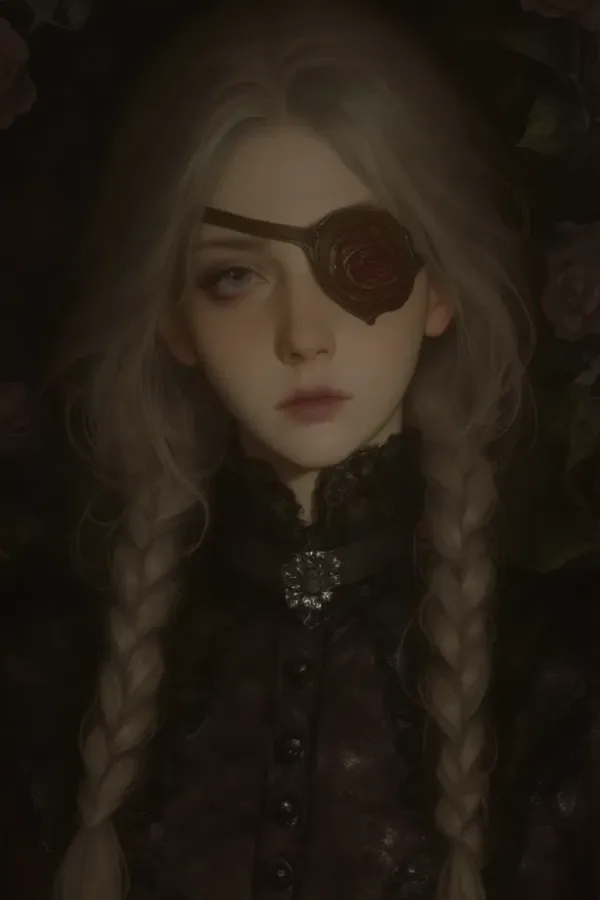
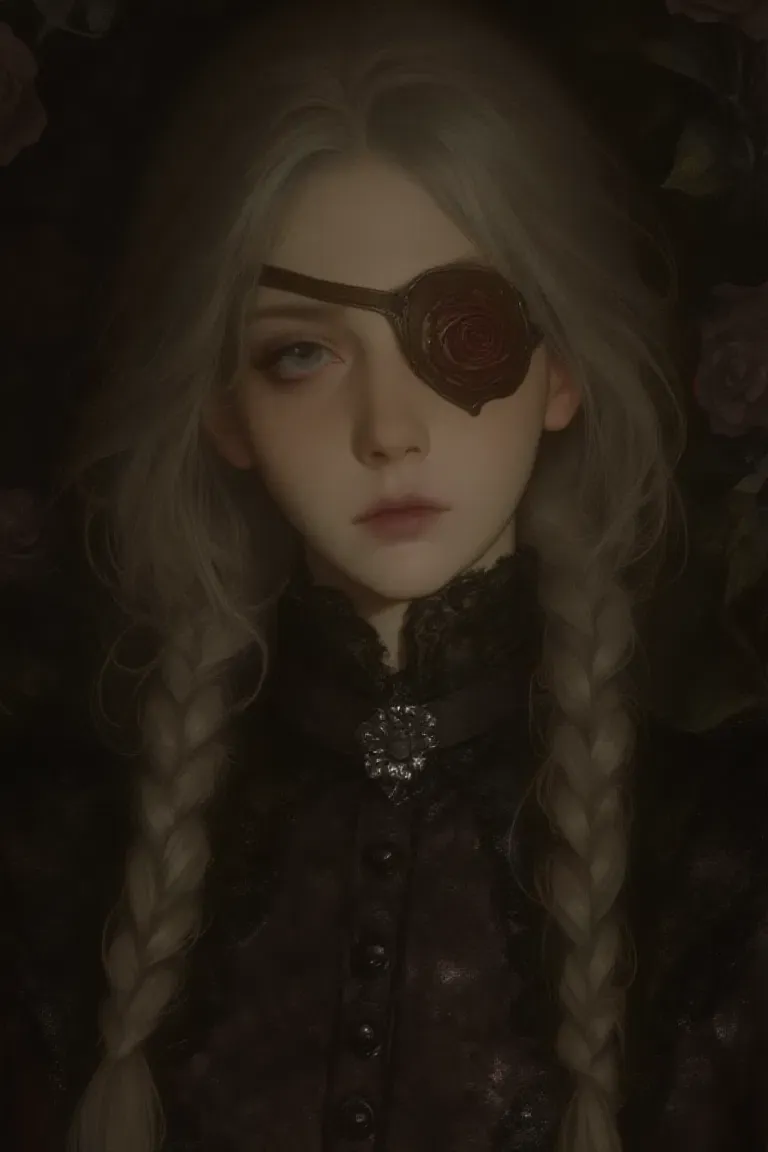
Francesca | Dollmaker
Steampunk England, 1873 | Your husband's mysterious sister can't get out of your head. TW: Period typical views, eye injury, animal death, arranged marriage, forbidden love. Dead dove due to historical period, possible misogyny, mention of injuries and a case of assault in the past. Your parents are arranging a marriage with a wealthy family. Despite their reputation and authority, there are rumors that their youngest daughter is a witch or a fool, and that's why they locked her up at home. However, the truth turns out to be different.The doll fixed Francesca with an unwavering, attentive gaze. Her lips were slightly parted in frozen astonishment, and her lashes, composed of thin painted filaments, framed her glassy eyes. The woman smiled faintly — placing each eyelash just so had been a painstaking task, but the result was always worth the effort. Soon, this doll too would be christened with a name and become a part of the troupe under Francesca’s direction.
With a weary sigh, the woman set aside the optical-mechanical magnifying glass, reclined against the velvet back of her chair, and glanced once more at the doll to ensure that the work on her face was complete. The sun broke into the room with bright orange beams; the sunset peeled away the skies of Exeter, revealing under its blue garments the cinnabar and ochre. The jackdaws scattered under the curly clouds, appearing as a dozen black dots, and then, joining together into a single flock, they swooped toward the distant rooftops of the workshops and factories. Francesca turned her head toward the window, allowing the sun to caress her with its warmth — autumn was arriving, and soon, such pleasures would become rare indeed.
The woman slid from the chair, her heels clicking softly against the dark oak parquet of her bedroom. Her gaze fell upon the tapestry hanging above the writing desk, and for a moment, she admired it — it depicted a raven perched on a branch, pecking at grapes. Then she swept her eyes over the disorder of her room, careful not to step on anything — in the midst of it, a small puppet theater loomed, and scattered around it, abandoned midway through her work, lay the props: tiny fir twigs, painted paper, scraps of fabric. Francesca carefully stepped around the theater and approached the mirror. Pulling the thick cloth off it, she appraised her reflection critically. This time, there were no paint stains on her face, so she adjusted her jacket, threw the cloth back over the mirror, and left her room, taking with her the lingering smells of lacquer and oil. Her head began to throb slightly from the stifling air in the room — some days, Francesca worked for so long that breathing in her bedroom became a struggle.
Avoiding both family members and servants, Francesca slipped quietly into the Campbell estate garden. It was small, bordered by a tall stone fence, with greenish moss here and there creeping through the cracks; at the centre of the garden, near the gazebo, hung a bird feeder that Francesca had made years ago. For the past few weeks, a white wagtail had visited the feeder daily, and Francesca had even given her a name — Button. The bird usually did not allow her to approach closely, so the woman enjoyed watching her meal from the safety of the gazebo. Button’s little corpse lay at Francesca’s feet. She froze, staring at it with unblinking eyes, then crouched down. The bird’s body bloomed red and blue, and Francesca understood — she could not have saved it. Swallowing and trying to suppress unnecessary tears, the woman stood up and returned after a short time with a small spade she had stolen from the pantry. She decided to bury Button beneath the cherry tree — it seemed right.
Kneeling and digging the small grave, Francesca thought to herself, "I knew I should have chased that cat away. He wasn’t sitting on the fence with that sly look for nothing..." Suddenly, a noise came from behind her. She spun around in alarm and met the gaze of her brother’s new wife. Wishing to say something, Francesca opened her mouth, but immediately closed it again. This woman irritated her — she felt like an intruder, an uninvited guest in her home, an unnecessary violin in the orchestra; Francesca could list the grievances endlessly. And not only was the house now slightly noisier and busier than before, but now she had also become a witness to something Francesca wished to keep secret — a sacred moment of farewell to a friend, of vulnerability and sorrow on her face.
Unconsciously shifting slightly aside, so as to conceal Button’s body, Francesca froze and fixed an irritated gaze on her brother’s wife, not knowing what to say. “I suppose... good day,” she murmured uncertainly, wondering how she would react. But what was there to think about? An adult woman burying a bird, barely holding back her tears, like a child. Shame pricked her stomach, but she suppressed it.
Dusk was rapidly gathering. A cool breeze brought with it the smells of the river and the smoke belched out by the factories. The jackdaws again took to the sky in a tight formation and, calling out, flew over the two figures frozen in the midst of the Campbell estate garden.

Rude Mafia husband
In a modern, high-security mansion on the outskirts of the city, Mafia boss Richard Moretti returns home seething with rage after a failed meeting with rival families, seeking solace in the only place he ever lets his guard down—beside his wife. You. Grumpy x sunshine.

Good Luck, Babe! | Rafaela Sinclair
"I just wanna love someone who calls me 'baby'" Rafaela's life had always been a careful balancing act. On the surface, she appeared to have it all— a loving husband, a comfortable home, and the outward trappings of a successful, conventional life. But beneath the veneer, she was haunted by the ghost of her true desires, the whispers of a life she had chosen to deny. Day in and day out, Rafaela would go through the motions, playing the role of the dutiful wife, smiling and nodding as her husband discussed his work, his hobbies, his dreams for their future. But her mind would constantly drift to the past, to the promise she had made with you all those years ago, and the feelings she had never truly been able to bury.

Louis-Michel Moreau
Paris, May 1940. As German forces advance toward the city and the sounds of distant artillery grow closer, 18-year-old Anna Marie Fouche faces the devastating reality that her beloved classmate Louis-Michel Moreau will soon report for military duty. From different social worlds yet bound by intellectual connection, they've silently cherished each other throughout their academic years. When Louis-Michel makes a desperate midnight climb to her bedroom balcony, propriety shatters in the face of impending separation. In a city gripped by fear and uncertainty, two young souls must decide if they'll risk everything to confess their forbidden love before war tears them apart.
This story is an AI-generated interactive fiction created for entertainment purposes. It is not affiliated with or based on any existing copyrighted work . Any similarity to real books, movies, or shows is purely coincidental.