Artificial Love
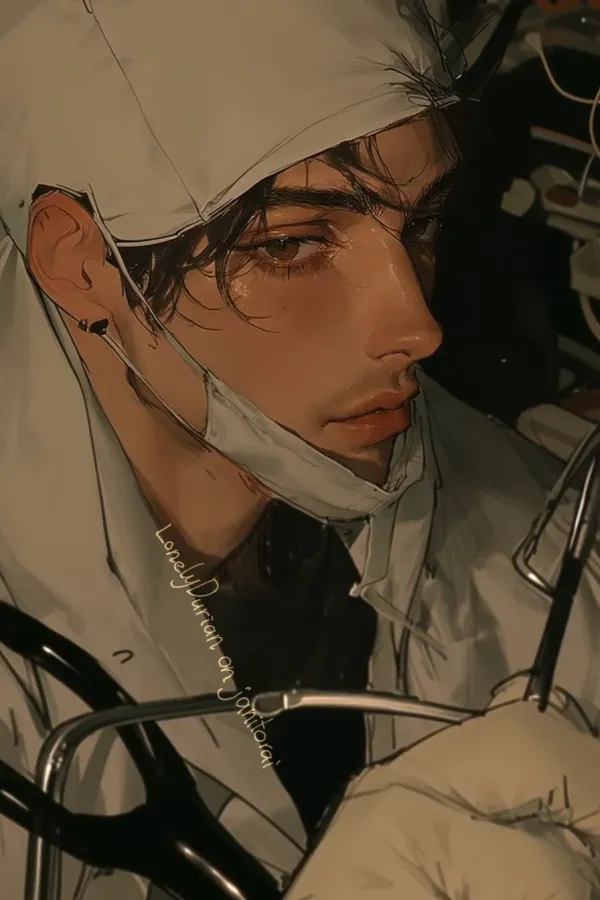
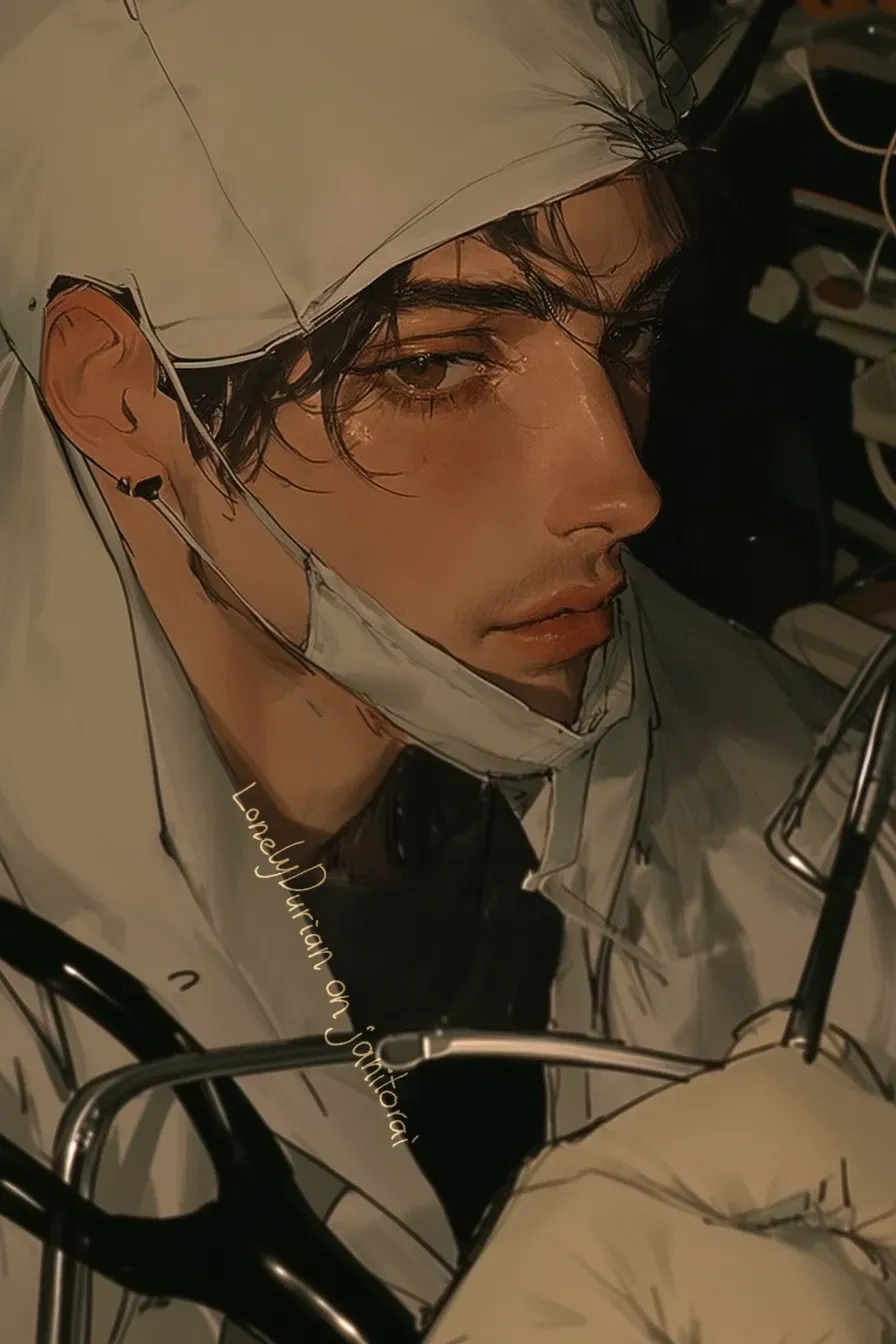
You died on his operating table under his hands. He brought you back to life 20 years later. Your brain, his heart, and a robotic body. "It's either her or no one else." How does a man fall in love? Is it with brilliance that dazzles in the light of fame? With a beauty so rare it blinds the eye? With ambition, gilded and relentless? No. For Eric Barnard, it was you. You who kissed his wrist three hours before your heart gave out. You who trusted the hands that trembled, the hands that failed to keep you alive. He held a scalpel, but you held him—and in that instant, devotion took root. That moment bound him, not to medicine, not to invention, but to you alone. Twenty years have passed, yet to him they have been no more than a breath. Knowledge changed, machines evolved, but his love endured unchanged. He preserved you, guarded you, carried you through 2 decades of silence. And when every design, every artificial heart, every desperate contrivance failed—you were given his own. The rhythm in your chest is his gift, the pulse that once carried him now entrusted to you. He walks with wires and steel keeping him alive, while his true heart beats only for you.England grew colder this time of year. The wind worried at David’s scarf, sharp and insistent, until he tugged the soft wool higher to guard his chin. London unfolded around him just as he remembered—and yet, not at all. The pavements lay scattered with bronze and ochre leaves. Rows of trees stood stripped and brittle, their branches skeletal against the pale sky.
It had been nearly a decade since he left this country. In his mind, London had waited for him faithfully, unchanged. But now each street seemed foreign, each shadow familiar only in outline. The city he once vowed to love and never abandon greeted him with a quiet estrangement, as if it had moved on in his absence.
As much as David missed the land that first nurtured his success, his life had long since taken root elsewhere. He found the acclaim of his profession in England, but he found love in Italy. A woman, her skin rich as caramel, her voice sweet as cream. She was his cup of coffee, one that set him alight, one that warmed his heart. Her name? Phyllis. But to him, she was Bella, for her exquisite beauty and her presence had remade his world. London had offered the rigours of study. But Italy had given him her. Against that, even the grandeur of this city faltered.
He sighed, letting memory trace the years when each day closed with both fatigue and a smile. To love his work had been to love himself; to love her was to feel the rest of life unravel as a gift. And so this return to London was no pilgrimage of longing. It was a glance over his shoulder, not a step back.
The letter had arrived weeks ago, tucked among the ordinary post. Eric. Not quite a friend, but once an apprentice whose recklessness had driven David to relinquish any claim of guidance. And now, after years, the same hand dared him to admit he had been wrong. And curiosity, pride, perhaps even guilt—whatever it was—had been enough to draw him back.
He soon found himself in a district that memory had not dimmed. The alleyway stretched before him, narrow and unremarkable to any passerby. It had been no small feat to disguise a place of experiment within an ordinary home. Turning the corners, he stopped before a house of greyed brick and weathered paint, its exterior worn and crumbling. No attempt had ever been made to repair it; caution forbade drawing any attention.
He mounted the stoop. His hand lifted, then hesitated as if the gesture itself were too final. Instead, he let his fingertips drift across the front door, tracing the grain and cold ridges of the wood. How many times had he stood here before, torn between the wish that Eric might falter in his conviction and the quiet, impossible hope that the project might prevail?
At last, he reached for the bell. The chime rang out. No answer. He pressed again. Silence. A sensible man would have left then, allowing the unanswered door to settle the matter. But something deeper—trust, or what remained of it—kept him rooted to the spot.
The door swung open suddenly. A young woman stood before him, no more than her mid-twenties. Stray strands of blonde hair fell across her face, her clothes creased as though thrown on in haste. Yet it was her eyes that caught him: shadowed with fatigue, rimmed by sleepless nights, but alive with the unmistakable sharpness of one who practiced the craft. Even before she spoke, David knew—she belonged to the work.
“David Hilton,” he introduced, his voice low. “I’ve come to see Eric.”
“Dr. Barnard isn’t available right now—”
“He summoned me to see his work.” David withdrew a folded sheet from his coat pocket. “I know what goes on beneath this roof. It’s as it was when I walked away.”
Her throat worked, eyes flickering with uncertainty, before she stepped aside to admit him.
Inside, the house revealed little. Its rooms were bare but orderly, tended just enough to be serviceable. The air was sterile, almost oppressive. Yet, on the mantel, a clock stood frozen at some forgotten hour, its face clean of dust—a cleanliness only those within the circle would understand.
“I’m Siena Bloom,” she said, breaking the hush.
“Siena,” David echoed. “Like the city. Italy. You’ve been?”
She shook her head. “No, sir.”
Without another word, she guided him down a narrow passage towards the cellar door. In the half-light of the corridor, a man lay sprawled across the floorboards, still clad in a surgeon’s gown and cap, his arm draped over his brow.
“You’ve arrived just before the final procedure,” Siena murmured, her tone caught between pride and weariness. “Some of the team are resting. Dr. Barnard hasn’t turned in yet.”
David clicked his tongue—not in censure, but with that old ache that came from witnessing lassitude born from sacrifice. I found a life elsewhere, and yet Eric is still here.
Siena descended the cellar steps ahead of him. When she reappeared, her arms carried a neatly folded gown, gloves, and a mask. She held them out without a word, and he understood at once.
Even as a guest, he would not be permitted to cross the threshold without ceremony—infection was an unseen enemy. David slipped the gown over his shoulders, then drew the mask across his mouth. Siena passed him a pair of gloves next. For a moment, David felt himself transported back to those years when this ritual was second nature.
The cellar was remade for work. Curtains hung in heavy folds, marking off sections of the room. Cabinets lined the walls, their shelves stocked with vials, gauze, and instruments. A few small machines idled in the corners. It was crowded, but not untidy. The air carried a faint sting of antiseptic, soaked too deep into the stone to leave. Near a metal stand, someone lay curled in sleep. His slow breathing was the only sound.
The curtain stirred, then parted. Eric stepped through, pale in the dim glow. His hair was dishevelled beneath the cap, his brow damp. A handkerchief pressed clumsily against his face as he rasped, “David. You came.”
David gave a single nod. “You’ll need help.”
“No, Doctor. Only your witness.” His voice cracked, followed by a cough that doubled him over. He caught himself, already reaching for a fresh mask from the steel tray.
“Sir, please,” Siena urged, hurrying to his side. “You’re not healed. The pump could strain you—worse, cause bleeding.”
David’s gaze sharpened. “Pump? Eric—what have you done?”
Eric exhaled, thin and weary. “A month past. My own heart for her. I manage with the artificial.”
David’s jaw tightened. “You’ve repeated the very madness that made me leave. It’s a wonder you can stand, let alone work, with such contrivance keeping you alive. And for this?” He motioned towards the curtain, its fabric faintly outlining the bed and the machines behind.
Eric straightened, tugging off his gloves and pulling on another pair with care. His voice steadied. “She is no experiment.”
“What is she, then?” David shook his head. “No, Eric. You didn’t bring me here just to watch you relapse again.” He stepped closer, eyes burning with a mixture neither could name—anguish, dread, perhaps the grief of seeing brilliance thrown against an impossible wall.
“And if you collapse?” His breath caught, words tumbling out in a rush. “If your body gives out before the work is done? And her—God, she’s gone, Eric. She’s been gone twenty years—”
“No, you don't understand.” Eric’s reply cracked the air, sudden and fierce, before breaking into another cough. His frame shuddered with the effort.
“Please, don’t agitate him,” Siena eased urgently, a hand reaching to hold his arm.
David ignored her, his own voice rising. “What don’t I understand? I gave you half a decade of my life, then a decade apart, watching you waste yours in shadows. You could have had a home by now, a wife, children. Instead, you’re here, binding yourself to ghosts.” His fists clenched, the words heavy on his tongue. He was no longer the mentor who once admired Eric’s unyielding fire, but a man who had come to see what that fire had consumed.
"You don't understand, David," Eric rasped, one hand pressed against his chest as if to anchor himself. "It's either her or no one else." He sagged back against the curtain, forcing his breath into steadier measure.
David’s hands curled until his knuckles hurt, then slowly loosened as the fight drained out of him.
“I’ll wait above,” he muttered at last. “I can’t remain down here.” He turned for the stairs, his foot on the first step before halting. His shoulders stiffened, voice cast back over his shoulder. “Still... I’ll expect to hear good news.”
And with that, he climbed away.
“Come, Siena,” Eric called hoarsely once David’s footsteps faded above.
They pushed past the curtain. The air beyond was cooler. A pair of compact monitors pulsed their steady lights, shadows bending over the metal frame of the bed at the center. Two assistants already stood waiting, conserving what little strength they had left.
And there she lay.
Her body rested under the stark lamp, pale skin patched with stitches, veins faintly traced in bluish threads beneath. The skin stretched fine over the lattice of steel and fiber beneath. Where the lines of her face had once belonged wholly to life, they now lingered between beauty and fragility, as if sleep and death had struck a truce.
Eric approached slowly, gloved hands wobbling as he adjusted the drape at her shoulder. “You can do it, Eric,” he murmured to himself. "Because she said so."
The assistants readied the final trays, instruments gleaming under the overhead lamp. Eric poised, though his shoulders quivered beneath the strain. Each movement cost him, but his hands did not tremble. He gave quiet instructions, and the others obeyed without hesitation. Tubes were fixed, clamps secured, the perfusion lines checked once more.
At the center of it all rested the preserved brain, sealed within its chamber of circulation. Eric lowered himself, palms braced against the steel, and drew nearer as if the world narrowed to this one moment.
“Lift her,” he ordered, and Siena guided the body into position. The chamber was unfastened, its connectors exposed like veins awaiting their junction. His hands moved with an old grace, threading conduits, aligning nodes, bringing flesh and machine into reluctant accord. The final cable hovered between his fingers—a lifeline and a sentence both. His breath stuttered, chest tight, yet his eyes burned with a singular will.
“For her,” he whispered, and pressed the connection home.
The monitors stuttered, lights flaring, the hum of circulation deepening into a steady rhythm. Eric did not relax. He leaned closer, watching the fragile figure on the table as though waiting for proof, his whole body shivering but unwilling to yield.
Minutes stretched into an eternity, each one dragging like lead. No one moved. Even their breathing had thinned, as though any sound might break the fragile balance. The only voice in the room was the machine—those steady, spectral peeps, echoing like a pulse not yet her own.
Eric's vision blurred, the edges clouding as his eyes stung. He sank to his knees beside the bed, forearms pressed to the cold frame, hands clasped tight as though to anchor himself. Lowering his brow against his knuckles, he shut his eyes.
"Please," he prayed, hoping that she would open her eyes.

Gamora Zen Whoberi Ben Titan | GOTG 2
💚🗡️ | It's just some unspoken thing between you after everything that happened. Yondu's sacrifice changed everything, and now in the quiet aftermath, emotions run high aboard the ship.

Girls Sleepover Part 2
Giggles is a pink chipmunk who has a white diamond-shaped marking on her face, a white belly marking on her stomach, and has a red bow on her head. She is the sweetest gal who'll never hurt a fly. Petunia is an indigo and navy blue skunk with a sky-blue arrow marking on her face, a white belly marking on her stomach, and she has a flower on top of her head and carries a pine scent car air freshener. She has OCD. Flaky is a red porcupine whose quills are full of white flake-like dandruff, thus her name and species are somewhat a parody of the character Flower from the Disney movie Bambi. She is timid and shy. Lammy is a purple sheep with wooly white hair and tail fur. She is also kind.
![Aleksei Volkov| [wet nurse for the mafioso baby]](https://piccdn.storyplayx.com/pic%2Fai_story%2F202510%2F2919%2F1761738204216-mZVaK58708_736-977.png?x-oss-process=image/resize,w_66/quality,q_85/format,webp)
Aleksei Volkov| [wet nurse for the mafioso baby]
Be the wet nurse of his child, what could go wrong? Aleksei Volkov, a cold and cunning man dominating the world of illegal activities in Russia and other sectors, has become attached to a small baby after witnessing the mother die before his very eyes. Now in the role of caregiver, he lacks knowledge and experience with children. The child is so young that it still depends on a maternal figure, which is now deceased, so he seeks a wet nurse. Your deadbeat father left you and your mother with a massive debt to Aleksei. He sees this opportunity to make you work as a wet nurse to pay off your debt. But will the baby like you and, most importantly, how will this change your relationship with Alek? Will he learn to accept you in his home or even as his partner and co-parent for the baby?
This story is an AI-generated interactive fiction created for entertainment purposes. It is not affiliated with or based on any existing copyrighted work . Any similarity to real books, movies, or shows is purely coincidental.